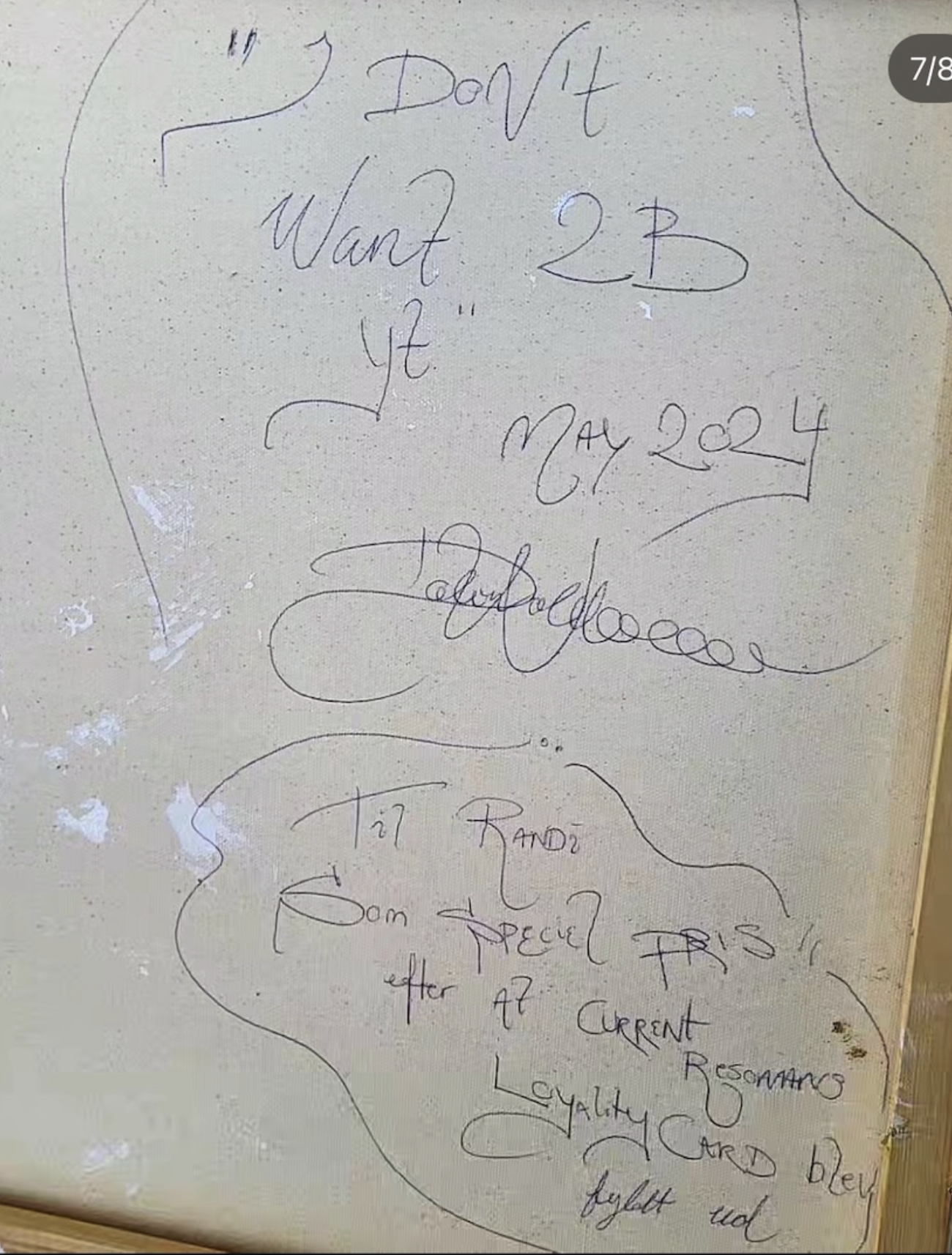
“I don’t Want 2B YT” — Performance, SPOR Festival 2024 (invited by Current Resonance)
I don’t Want 2B YT is a live, improvisational performance exploring mediated speech, racialised politeness, and the unstable boundary between audience participation and bodily vulnerability. The work was presented in 2024 as part of Current Resonance’s program at SPOR Festival.
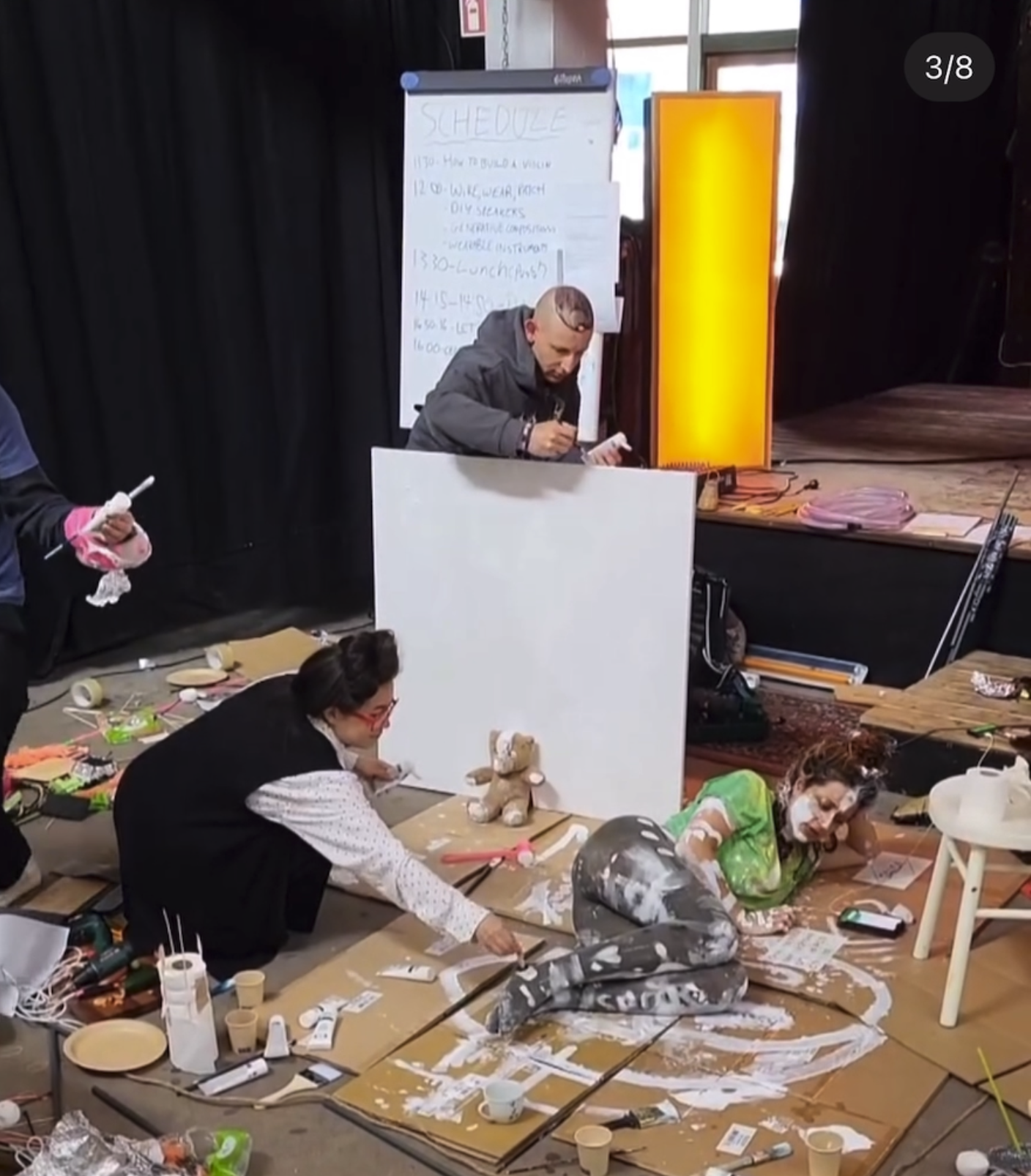
On stage, I stood alongside a line of neatly arranged materials: white paint, brushes, tools, a blank canvas, and a small teddy—objects that simultaneously signal play, ritual, and care. Throughout the performance, I communicated exclusively through my personal AI assistant, Pi, which was connected directly to the loudspeakers. Every sentence I whispered into the device ended with a ritualised request: “please say it nicely.” Pi acted as a socially-acceptable filter, translating my raw speech into a softened, “polite” version addressed to the audience.
This system became both interface and mask. It allowed me to externalise a lifelong anxiety around “sounding polite enough,” an anxiety deeply entangled with racialisation—being perceived through a “brown savage” lens of misread intention, sharpness, or rudeness. Instead of explaining this directly, I embedded it in the structure: the AI speaks for me, not because I cannot speak, but because I am not always allowed to.
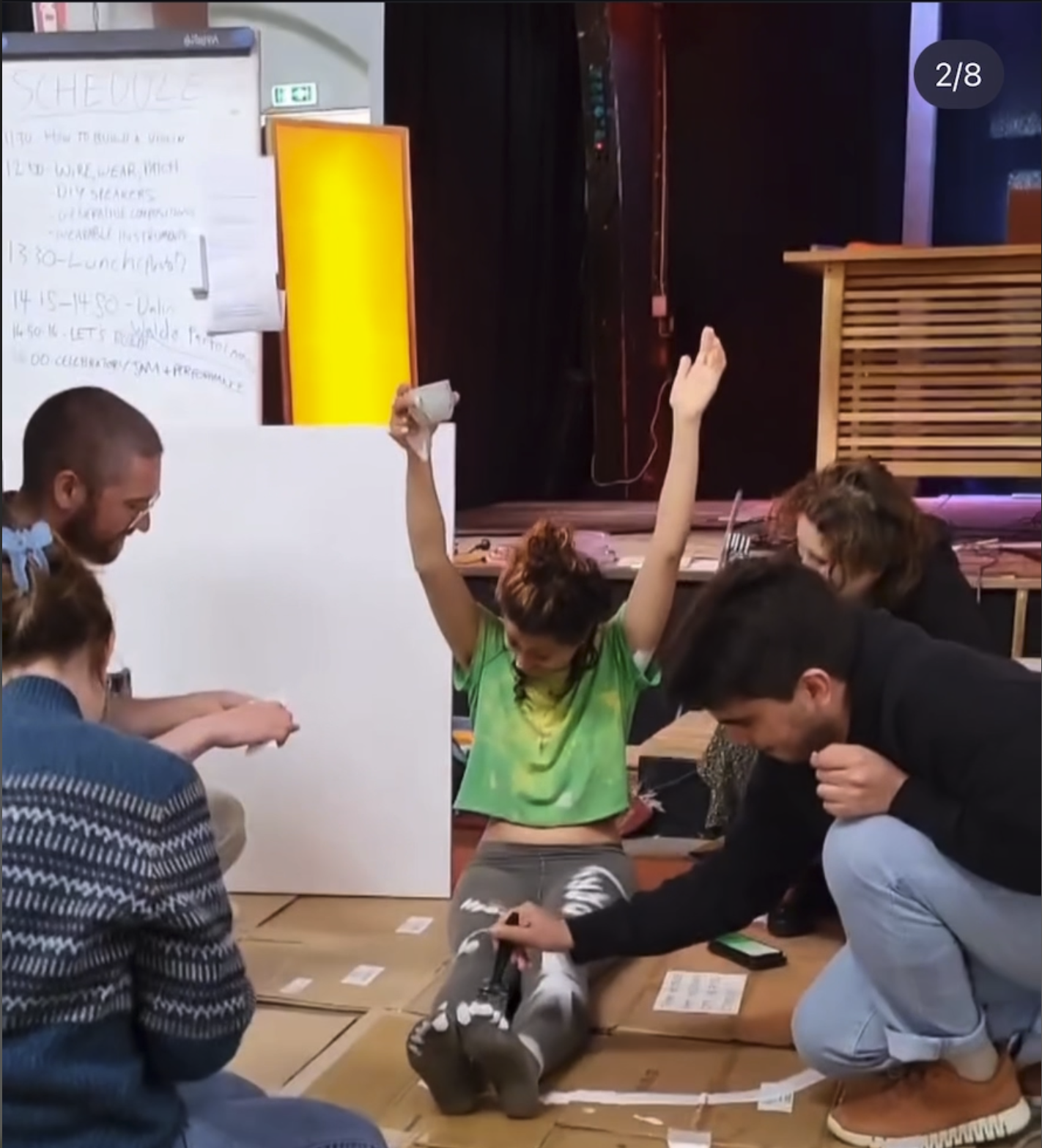
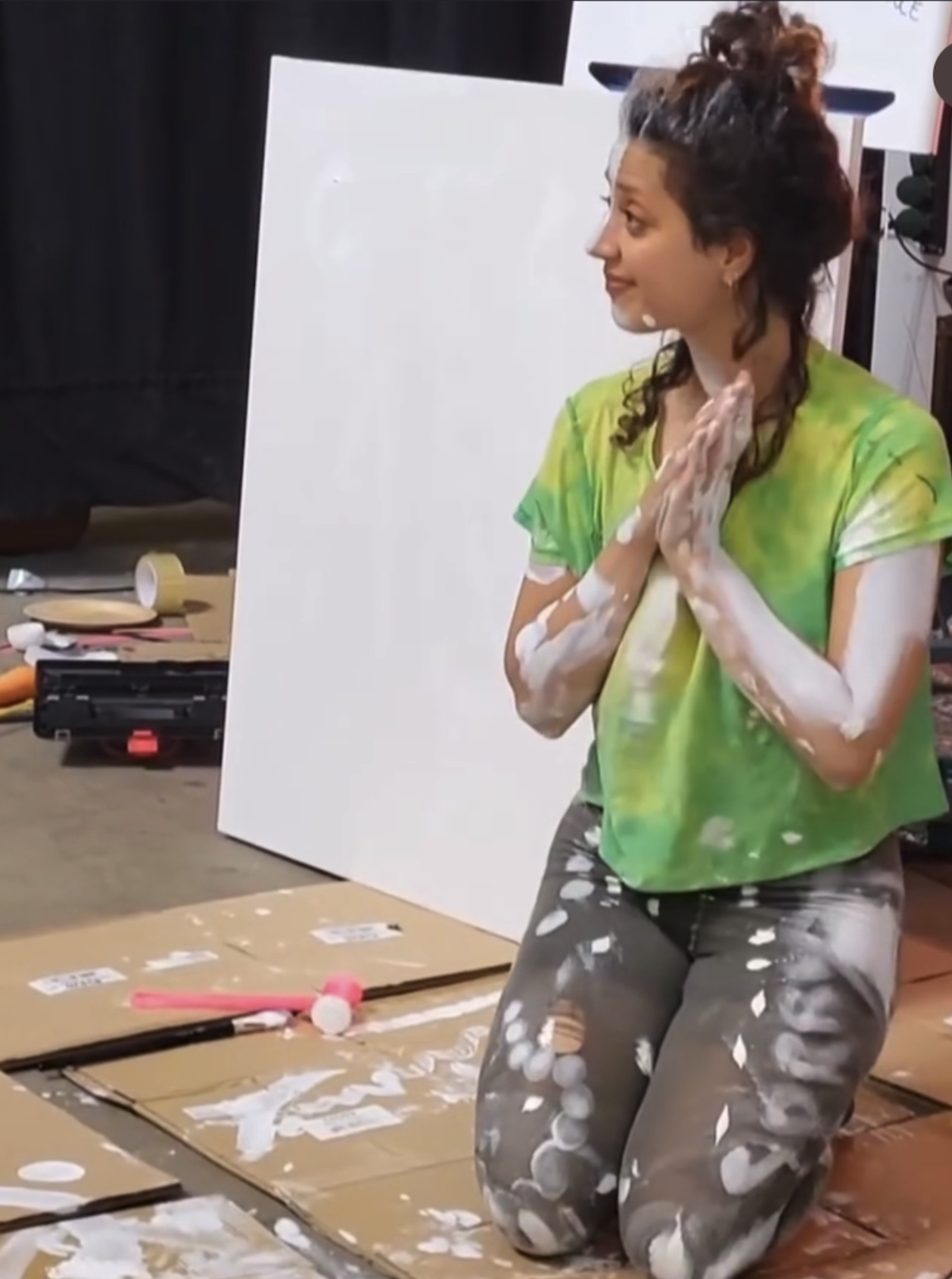
Pi invited the audience to come forward and paint me. As people began to cover my skin in white paint, the work shifted into an improvised relational choreography. I reacted physically—ticklishness, discomfort, pleasure, awkwardness—while Pi attempted to translate my whispers to the room. Often the AI mistranslated, softened, or outright refused to convey my expressions, especially when it misidentified my sensations as “too intimate” or “erotic.” The result was a glitching loop of desire, denial, and algorithmic censorship: a machine conditioned to sanitise affect, moderating my body in real time.
This slippage forms the conceptual core of the performance. It exposes the tension between liveness and algorithmic mediation, the way identity is continually negotiated between what is felt, what is permitted to be said, and what is projected onto the body. The audience becomes implicated—both caring participants brushing paint onto skin, and unwitting extensions of a system that whitens, neutralises, and regulates expression.
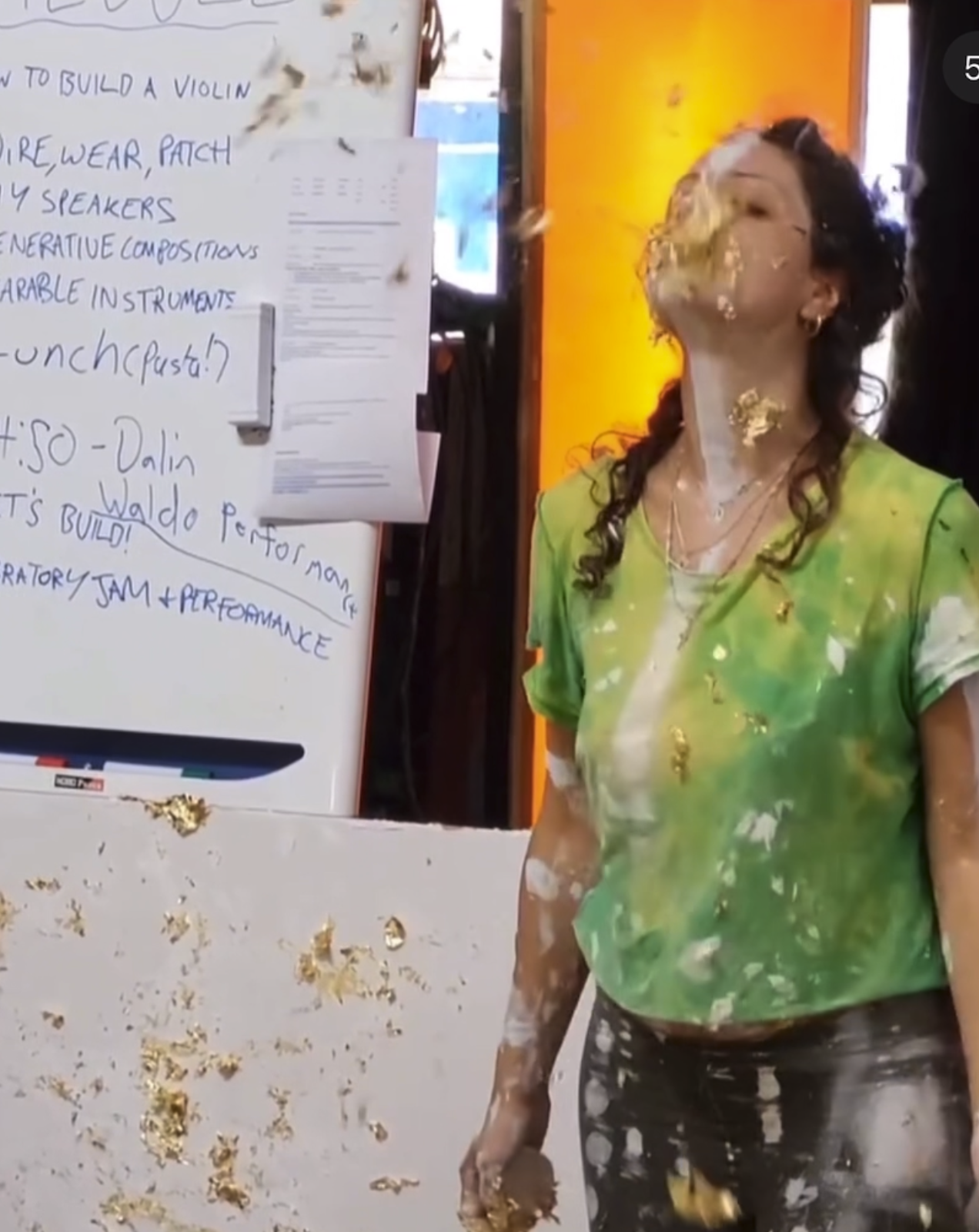
Once fully painted in white—symbol of neutrality, purity, and erasure—I asked (through Pi) whether everyone had had the chance to paint me. Then I whispered a final confession to the AI: that I did not actually want to be white. As Pi voiced this confession out loud, I began tearing the performance open. I covered myself with gold leaf and golden paper, pushing glitter out of my nose like a small, clownish exorcism. The gesture oscillated between ritual unmasking, self-reclamation, and humorous revolt. The white surface became disrupted, patched, undone—revealing not a “truer” identity, but the refusal to be flattened into one.
The performance ended with my body shimmering in imperfect gold, a fragile and playful counter-gesture to the earlier whiteness
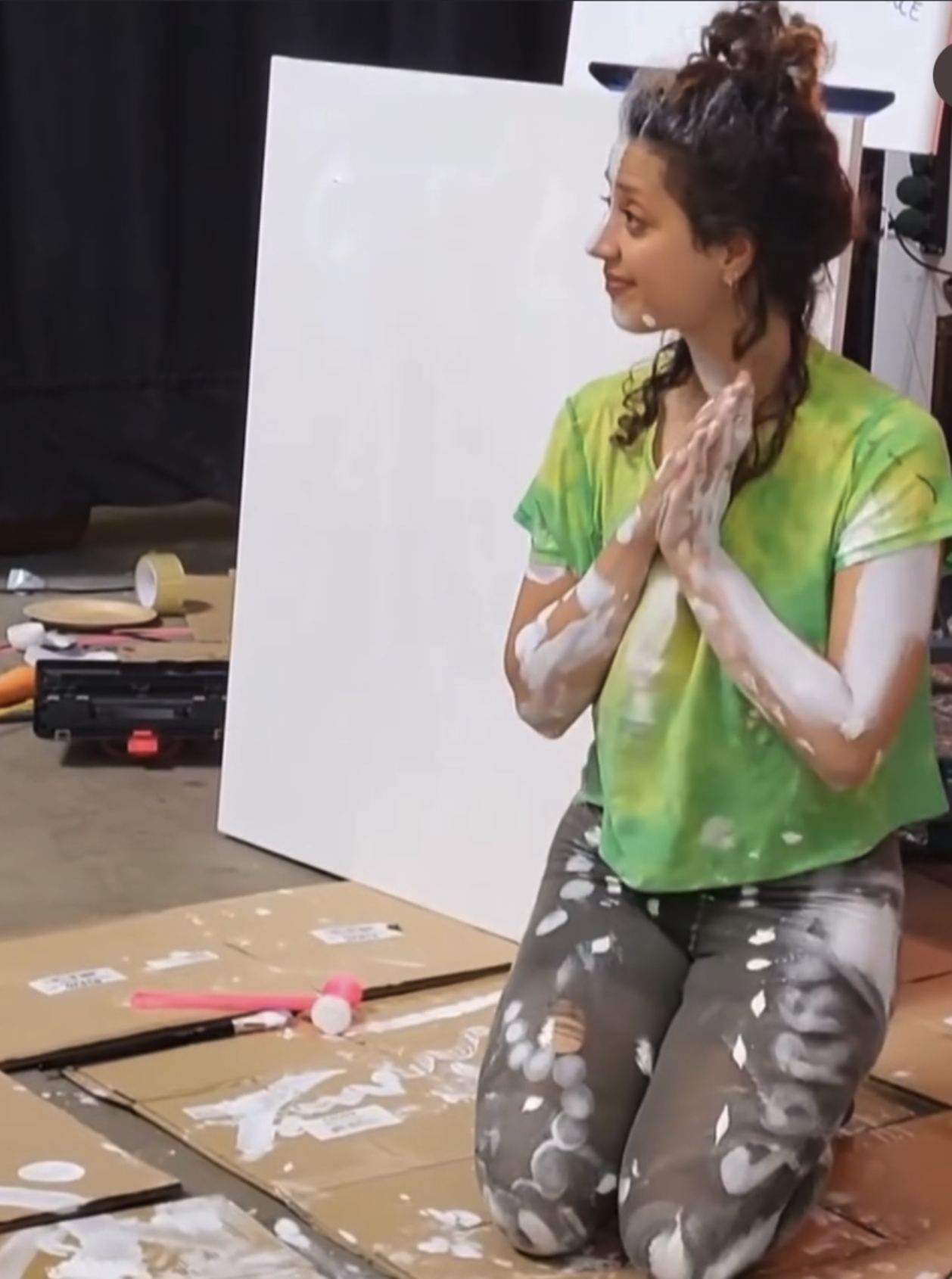
Video documentation of “I Don’t Want 2B YT“ by @sisterculture